
Copying the Cops Next Door: 287(g) Agreements
Policy Diffusion - Pt 2/4

In last Monday’s post, we looked at how city councils often look sideways, not just upward, to decide what to do next. Whether it’s banning cannabis businesses, adjusting zoning laws, or rewriting police ordinances, local policymakers rarely act in isolation. They watch what their peers are doing. Sometimes they imitate, sometimes they learn, and sometimes they’re pushed.
This week, we turn to a policy with far higher stakes than cannabis zoning: the spread of 287(g) agreements, which allow local police to collaborate with federal immigration authorities (ICE).
The 287(g) Program: What It Is and Why It Matters
Under Section 287(g) of the Immigration and Nationality Act, local law enforcement agencies can sign formal agreements with ICE to perform certain federal immigration enforcement functions. These partnerships are highly controversial. Supporters say they strengthen law enforcement and public safety. Critics argue they erode community trust, encourage racial profiling, and divert local resources away from actual local priorities.
But regardless of where you stand on the issue, one thing is clear: these agreements don’t spread randomly. Their adoption across the United States follows the same kind of policy diffusion pattern we saw with marijuana ordinances. Except this time, it’s sheriffs and county officials doing most of the copying.
A Rapidly Growing Network
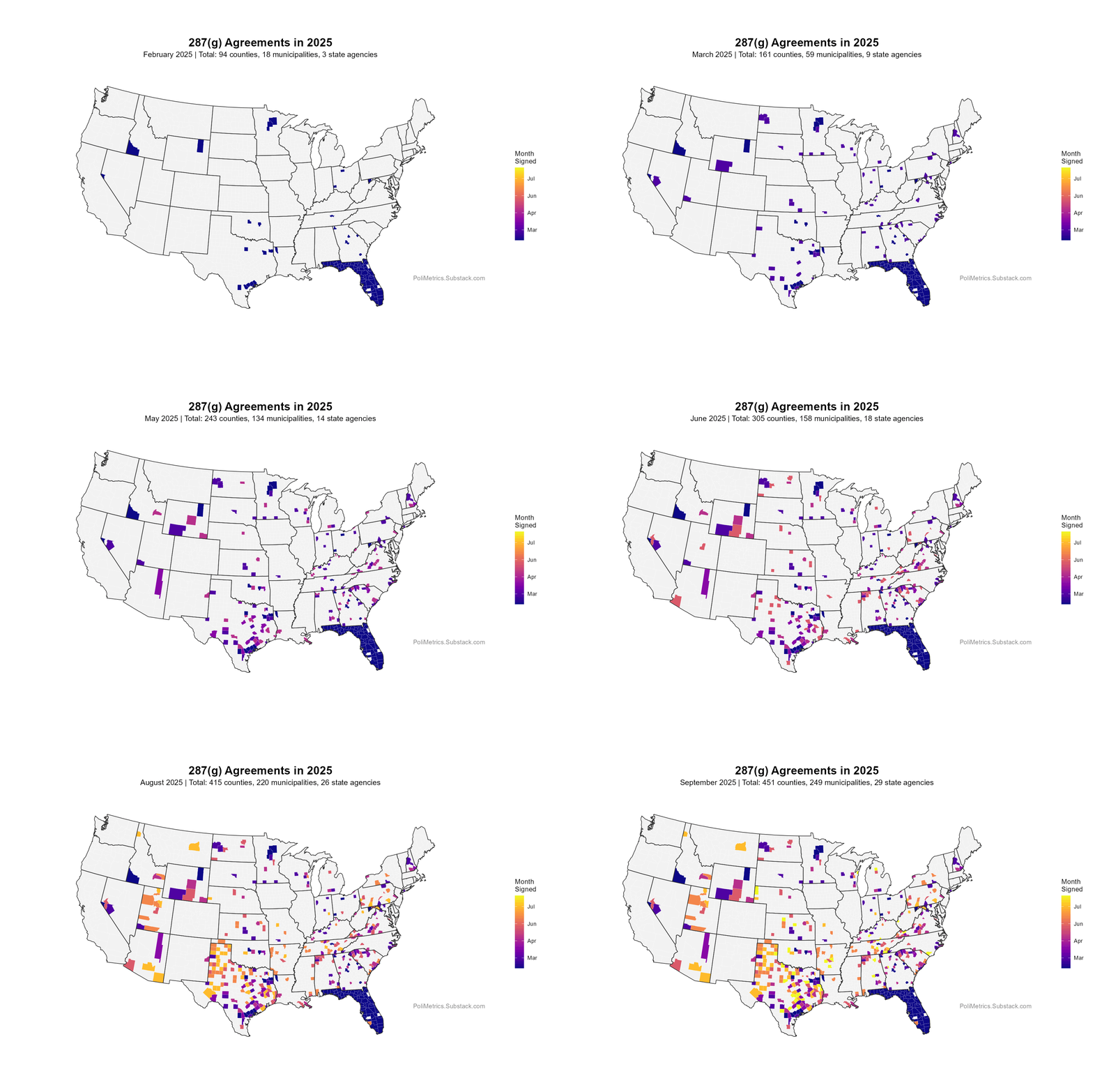
At the start of 2025, only 135 localities had active 287(g) agreements. By September 2025, that number had ballooned to 1,035, a nearly eightfold increase in nine months.
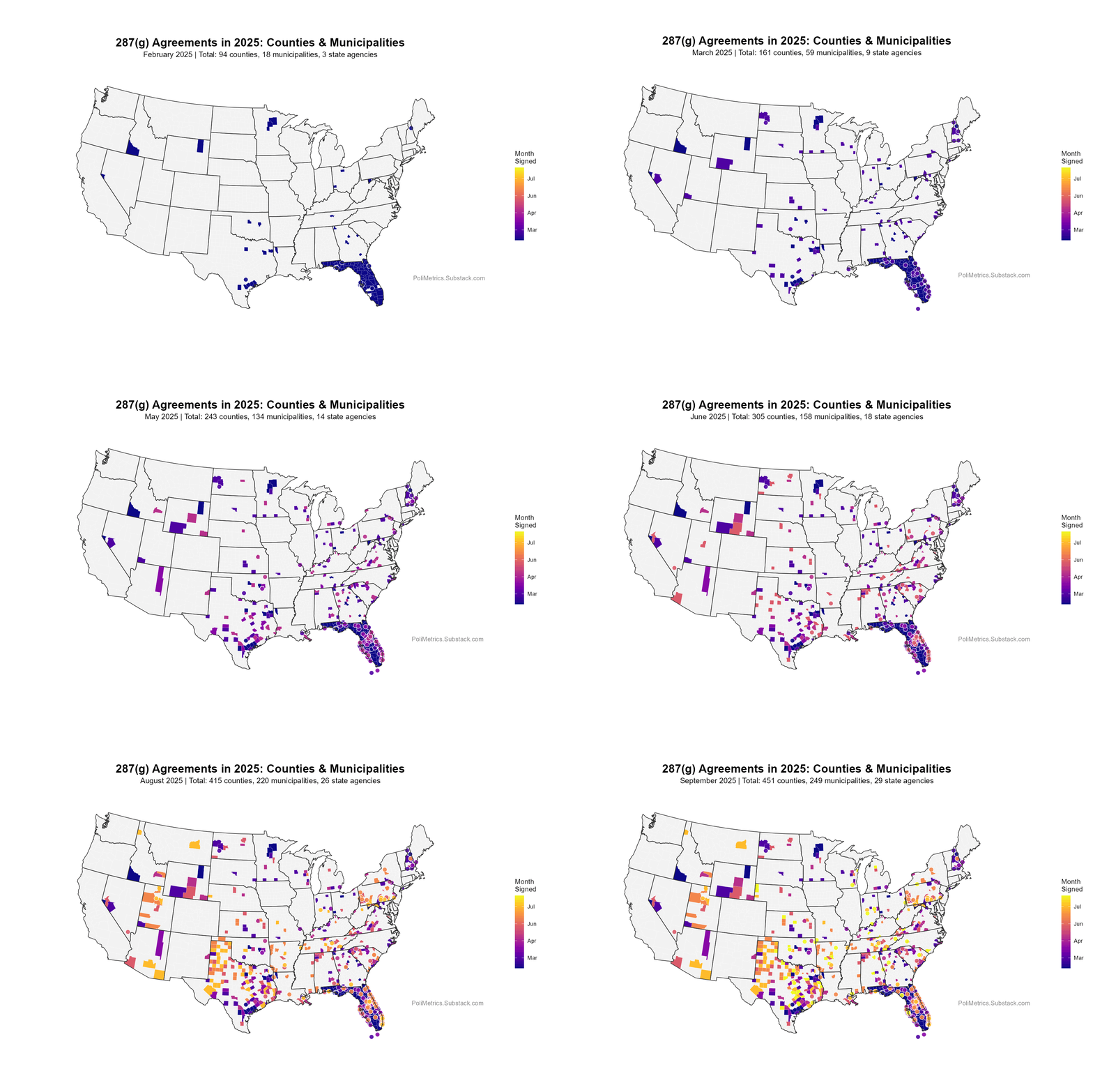
The growth wasn’t evenly distributed. Some states barely budged. Others exploded. Two in particular, Florida and Texas, emerged as clear epicenters. Florida now accounts for 327 agreements and Texas for 185, together representing roughly half of all local partnerships in the nation.
What’s interesting in terms of policy diffusion is not just how many agreements exist, but where they appeared and when. In early 2025, the first wave clustered across the Southeast. By midsummer, similar clusters appeared across Texas, Oklahoma, Arkansas, and Louisiana. By late summer, the spread reached parts of the Midwest and Mountain West, with smaller waves in states like Pennsylvania, Utah, and Kansas.
This pattern suggests a clear chain of imitation and learning: counties and municipalities observing what others are doing, evaluating perceived outcomes, and following suit.
Imitation: Copying What Seems to Work
Imitation is one of the simplest and most powerful forces behind local policymaking. County sheriffs and local officials often operate within tight professional circles—state associations, regional task forces, and law enforcement conferences—where new policies are discussed informally long before they hit the news.
When one county adopts a 287(g) agreement, nearby counties and municipalities take notice. They see that the program was implemented, that the sheriff received positive press coverage (or political backing), and that no immediate controversy erupted. The signal is clear: this is safe to copy.
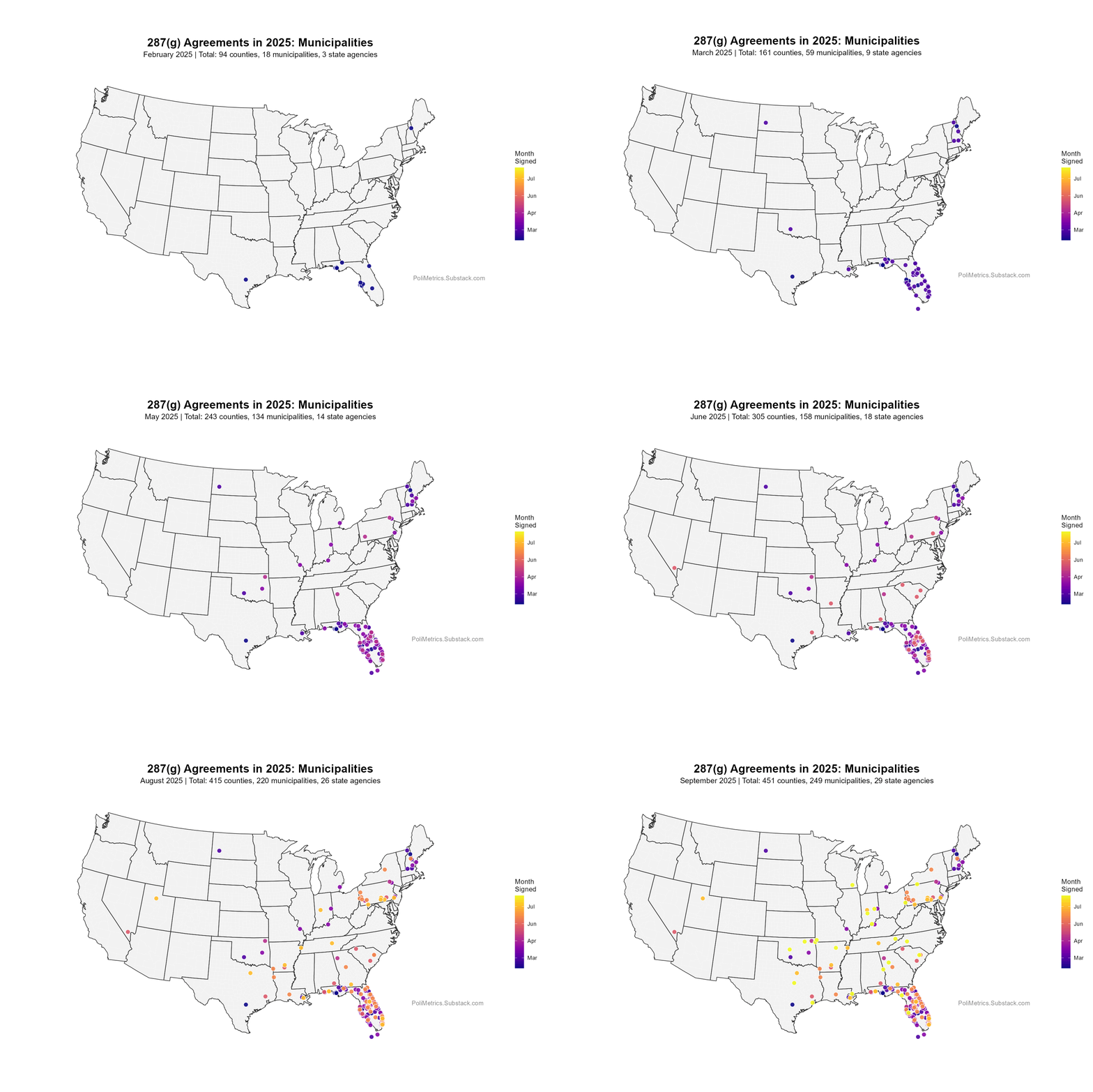
In 2025, that imitation was visible across entire regions. Southern areas didn’t just sign agreements independently, they moved in clusters. The month-to-month data shows surges right after neighboring counties municipalities adopted, a hallmark of imitation-driven diffusion.
Specific examples of imitation have been documented. In early 2025, whole clusters moved together. Florida’s sheriffs announced that all 67 county jails had signed 287(g) agreements, creating instant social proof. Weeks later, ICE unveiled 18 new agreements in Texas at a single event, reinforcing the sense that ‘your peers are doing this now.’ In North Carolina, reporters described neighboring counties that had already ‘followed suit’ as New Hanover debated 287(g).
Learning: Watching, Waiting, and Following
But imitation isn’t the whole story. As the policy spread into new parts of the country, the timing and geography suggest learning played an increasing role.
Counties and municipalities in the Midwest and West didn’t rush in right away. They watched. They waited to see how early adopters managed implementation, whether there was backlash, and how ICE partnerships interacted with local priorities.
By the time they signed, they weren’t copying blindly, they were adapting. That’s what learning looks like in policy diffusion: jurisdictions observing others’ experiences and adjusting the policy to fit their own institutional or political realities.
Again, examples of learning have been documented in 2025 as well. Many counties and municipalities waited, watched, then adopted with caveats. Utah County approved a 287(g) data partnership after extended public testimony. The sheriff acknowledged past hesitations and pledged to recommend termination if violations surfaced—classic learning behavior. Across the Midwest, coverage framed growth as an ‘expansion’ that officials justified by pointing to perceived results in peer jurisdictions. Federal press releases touting ‘1,000+ partnerships’ further bolstered the ‘if it’s widespread, it works’ heuristic.
What This Means for Local Democracy
These patterns highlight something deeper about how local governments make decisions. Even policies that directly affect community relationships and civil rights, like immigration enforcement, often spread through quiet processes of imitation and professional learning rather than local public debate.
In other words, your county’s decision to join the 287(g) program might have more to do with what the next county or municipality over did than with what residents actually wanted.
That raises important questions about local accountability:
Who are your local officials listening to—residents or peers?
What kinds of “success” are they seeing when they decide to copy?
And are the jurisdictions they’re learning from even comparable to your own?
Understanding how policies spread due to imitation and learning is important for both advocates and critics. If you’re an advocate, once your policy has been enacted in one area, you know where to focus efforts to expand the policy further. Similarly, if you’re a critic, you know the locations where you need to start building a firewall of resistance to the policy.
Looking Ahead
Imitation and learning explain much of what happened in 2025, but not all of it. Some localities didn’t just imitate; they were encouraged to join through political pressure, funding incentives, or fear of being left behind.
In next week’s post, we’ll look at those stronger forces: how coercion and political incentives drive local participation in federal programs like 287(g). Because sometimes, what looks like learning is really just leverage.
Data Sources: ICE 287(g) agreement data (2025), county-level adoption records, American Community Survey data, and author’s analysis.
Love how pathetic the source data is, just drop random pins on a map and you are a researcher.